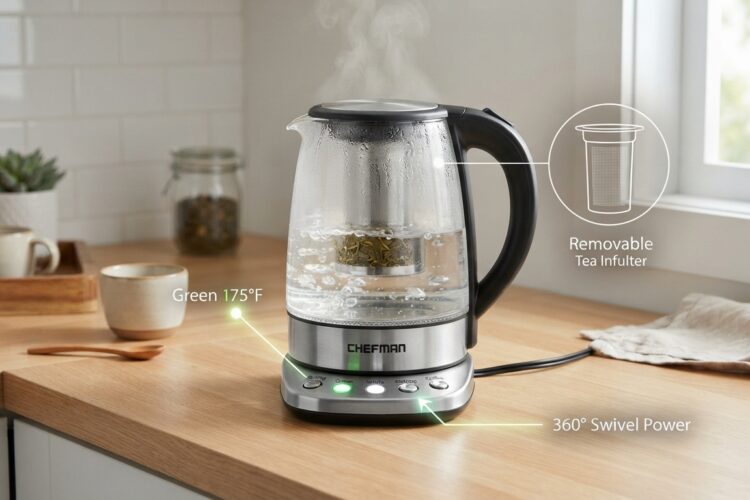
Boiling water sounds like a simple task, but anyone who drinks tea, pour-over coffee, or uses hot water for cooking knows that temperature matters more than most people assume. A kettle that simply brings water to a rolling boil every time can actually work against delicate teas or coffee brews that need gentler heat. This is where temperature-controlled electric kettles, like the NChefman Electric Kettle with Temperature Control, have carved out a niche in modern kitchens.
This article takes a closer look at what this kettle offers, how it might fit into different routines, and what to think about before adding one to your countertop. Rather than reading like a sales pitch, the goal here is to walk through the practical details so you can decide whether it aligns with your needs.
What Is the NChefman Electric Kettle?
The NChefman Electric Kettle is a glass-bodied, stainless steel electric kettle designed around the idea that not all hot beverages call for the same water temperature. It holds 1.8 liters, which is a fairly standard capacity for household kettles, generally enough for several cups of tea or coffee without needing to refill constantly. The glass construction allows you to visually monitor water levels and watch the boiling process, which some people find useful, especially when timing a brew.
Unlike basic kettles that only have an on/off switch, this model includes five temperature presets, a removable tea infuser, and LED indicator lights that correspond to different heat settings. It also sits on a 360-degree swivel base, a feature that has become fairly common in cordless kettle designs because it makes pouring and repositioning more convenient regardless of which side of the counter the outlet is on.
Key Features
Adjustable Temperature Presets
The core feature of this kettle is its five-setting temperature control system. Different beverages typically benefit from different water temperatures:
- Delicate green teas are often brewed at lower temperatures, sometimes in the 160–180°F range, since boiling water can make them taste bitter or grassy.
- White teas tend to follow a similar pattern, needing gentler heat to avoid overpowering their subtle flavor.
- Oolong teas usually sit in a moderate range.
- Black teas and herbal infusions generally call for water closer to a full boil.
- French press coffee and some pour-over methods also have their own recommended temperature windows, often just below boiling.
Having presets built into the kettle removes the guesswork of waiting, checking, and adjusting manually, which is typically the appeal for people who drink a variety of teas or coffee styles throughout the week.
LED Indicator Lights
Each temperature setting is paired with an LED indicator, making it easier to see at a glance which mode is active. This kind of visual feedback can be particularly helpful in a busy kitchen where you might step away while the water heats, since you can quickly confirm the setting from across the room rather than pressing buttons again to check.
Removable Tea Infuser
The kettle includes a removable infuser basket, which allows loose-leaf tea to steep directly in the kettle rather than requiring a separate teapot or infuser tool. This can simplify the process for people who prefer loose-leaf tea over bags, since it consolidates heating and steeping into a single vessel. The infuser can be taken out for cleaning or when boiling water for purposes other than tea, such as cooking or coffee preparation.
Glass and Stainless-Steel Construction
The body is made of glass, paired with stainless-steel accents and a BPA-free interior. Glass kettles have become popular for a few practical reasons:
- They let you see the water level without opening the lid.
- They allow you to watch the color and steeping progress of loose-leaf tea.
- They don’t retain odors or flavors from previous use as readily as some plastics might.
BPA-free construction is worth noting for anyone who is mindful about the materials that come into contact with heated water, since BPA is a chemical compound some people prefer to avoid in food-contact products.
360° Swivel Base
The cordless base rotates a full 360 degrees, meaning the kettle can be lifted off and placed back down without needing to align it in a specific direction. This is a small but genuinely useful design detail for kitchens where counter space is tight or where the outlet placement doesn’t leave much room to maneuver.
Automatic Shut-Off
Many electric kettles in this category include automatic shut-off functionality once water reaches the selected temperature or begins to boil. This is generally considered a standard safety feature in modern kettles, reducing the risk of dry boiling if the kettle is accidentally left unattended.
How It Can Be Used
An electric kettle with temperature control isn’t limited to tea drinkers, though that’s often the primary audience. Here are some practical ways this type of kettle can fit into daily routines:
Tea preparation across varieties. Since different teas benefit from different steeping temperatures, having presets means you don’t need to rely on a thermometer or guesswork. Loose-leaf drinkers in particular may appreciate the built-in infuser, which reduces the number of separate tools needed.
Pour-over and French press coffee. Coffee enthusiasts often pay close attention to water temperature, since water that’s too hot can extract bitter compounds, while water that’s too cool may under-extract and produce a flat-tasting cup. A kettle with adjustable presets can help maintain more consistency between brews.
General hot water needs. Beyond beverages, hot water is useful for instant oatmeal, soups, hot cocoa, or even quickly softening certain foods before cooking. A kettle that heats water faster than a stovetop pot can be a convenient tool for these everyday tasks.
Baby formula preparation. Some parents use kettles with adjustable temperature settings to prepare bottles at a safer, more moderate heat rather than boiling water and waiting for it to cool. (As always, guidelines from a pediatrician or formula manufacturer should take precedence over general kettle settings.)
Small kitchen or office use. Because electric kettles heat water faster than most stovetop methods and don’t require a full stove setup, they can be practical additions to office break rooms, dorm rooms, or small apartment kitchens.
Who It May Be Suitable For
This type of kettle tends to appeal to a fairly broad range of households, though certain groups may find it especially relevant:
- Tea drinkers who rotate between different tea types. If you regularly switch between green, white, oolong, and black teas, a kettle with multiple presets can save time and reduce the trial-and-error of manual temperature adjustment.
- Coffee enthusiasts who use manual brewing methods. Pour-over and French press users often care about water temperature more than drip-coffee-machine users, since manual methods put more control (and more responsibility) in the brewer’s hands.
- People who prefer loose-leaf tea over bags. The built-in infuser removes the need for a separate steeping vessel.
- Households looking to reduce stovetop kettle use. Electric kettles are often faster and can be more energy-efficient for small amounts of water compared to heating a full pot on a stovetop burner.
- Anyone prioritizing visual feedback. The glass body and LED indicators may appeal to those who like to visually track the process rather than relying solely on sound or timers.
That said, this kettle may be less necessary for someone who only ever makes coffee via a drip machine or who doesn’t drink tea at all, since the temperature-preset feature is the primary value proposition here.
Important Things to Consider
Before purchasing any electric kettle, a few practical points are worth thinking through:
Capacity and household size. At 1.8 liters, this kettle is suited to small-to-medium households. If you regularly need to boil water for a large group or multiple pots of tea back-to-back, you may find yourself refilling more than once.
Cleaning and maintenance. Glass kettles can show mineral buildup (limescale) more visibly than opaque materials, especially in areas with hard water. Regular descaling with a water-and-vinegar solution or a dedicated descaling product is generally recommended for any electric kettle, and this one is no exception.
Countertop space and storage. While the swivel base adds convenience, it’s worth measuring your available counter space, particularly if your kitchen has limited room near an outlet.
Learning the preset system. As with most appliances that offer multiple settings, there’s a small learning curve involved in remembering which preset corresponds to which beverage type. Reading the included instructions before first use is generally a good idea.
Long-term appliance care. Like most electric kettles, this one will benefit from being kept dry on the outside, having its power base kept away from moisture, and being descaled periodically rather than left to accumulate mineral deposits.
Comparing General Categories of Kettles
To put this kettle’s features into context, it can help to compare general categories of kettles available on the market:
Stovetop kettles are simple, often durable, and don’t rely on electricity or internal components that can wear out. However, they generally lack any built-in temperature control, requiring a separate thermometer if precise temperatures matter to you. They also tend to take longer to heat water compared to electric models.
Basic electric kettles (on/off only) heat water quickly and are typically straightforward to use, but they usually only bring water to a full boil, which isn’t ideal for delicate teas or some coffee brewing methods.
Temperature-controlled electric kettles, the category this NChefman model falls into, add the ability to select specific heat levels, often paired with features like infusers, keep-warm functions, and indicator lights. These tend to suit people who care about brewing consistency across different beverage types, though they typically come with a slightly steeper learning curve and more components to maintain than basic kettles.
Each category has its own trade-offs between simplicity, speed, precision, and price, so the right choice really depends on how much you value temperature accuracy versus straightforward operation.
Frequently Asked Questions
Does this kettle work for coffee as well as tea? Yes, temperature-controlled kettles are commonly used for pour-over and French press coffee, since these methods often benefit from water that’s just below a full boil rather than at 212°F.
Is the glass body durable? Glass kettles are generally designed with heat-resistant borosilicate or similar tempered glass, which is built to withstand repeated heating cycles. As with any glass appliance, avoiding sudden temperature shocks (like adding ice water to a hot kettle) and handling it carefully is advisable.
Can the tea infuser be used with tea bags as well as loose leaf? Infusers are typically designed for loose-leaf tea, though many people also use the kettle without the infuser and simply add a tea bag directly or steep separately.
Does the automatic shut-off feature work with every preset? Automatic shut-off is generally a standard safety mechanism across preset temperatures and full boiling, though it’s worth reviewing the included manual for the specific behavior at each setting.
How often should the kettle be descaled? This varies by water hardness, but many manufacturers suggest descaling every few weeks to once a month for regular users, or sooner if mineral buildup becomes visible.
Is BPA-free construction important? For many consumers, BPA-free materials are a preferred standard for anything that comes into contact with heated water or food, since some studies have raised questions about BPA exposure over time. This is a personal consideration based on individual preferences and available research.
Conclusion
The NChefman Electric Kettle with Temperature Control brings together several features that matter to people who care about the specifics of their hot beverages: adjustable presets, a visual glass design, a removable infuser, and a flexible swivel base. Whether it’s the right fit depends largely on your habits — frequent tea drinkers with varied preferences and coffee enthusiasts using manual brewing methods are likely to get the most value from the preset system, while those who only need water at a single, consistent boil might not need the added complexity.
As with any kitchen appliance, it’s worth weighing your household’s typical usage, available counter space, and willingness to maintain the kettle over time (descaling, cleaning the infuser, and so on) before deciding if it fits your routine.