Blenders have quietly become one of the most versatile appliances in the modern kitchen. What used to be a single-purpose device for smoothies has evolved into a multi-functional tool capable of handling everything from crushed ice to homemade nut butters. Among the many options available today, the Ninja UltraCrush Professional Blender (model BP201) stands out as an example of how manufacturers are trying to combine power, capacity, and simplicity into one countertop appliance.
This article takes a closer look at what this blender offers, how it might fit into different kitchen routines, and what shoppers should think about before adding it to their countertop lineup. Rather than focusing on marketing language, the goal here is to provide a grounded, practical overview based on the product’s stated features and specifications.
Introduction to the Ninja UltraCrush Professional Blender
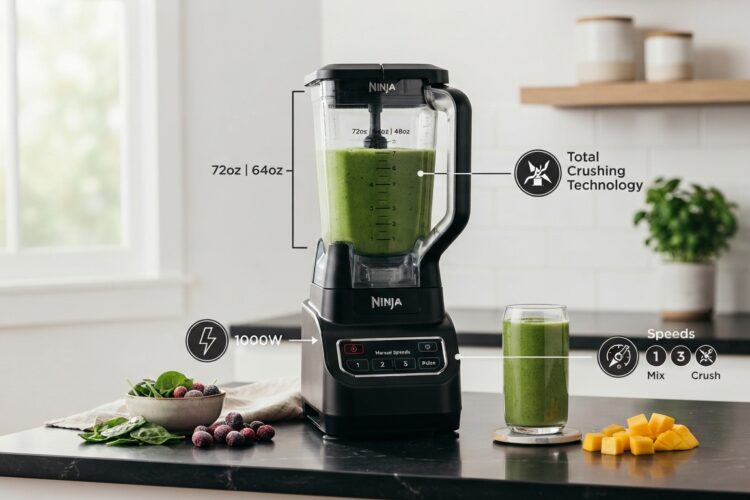
The Ninja UltraCrush Professional Blender is designed as a full-size countertop appliance built around a 1000-watt motor and Ninja’s Total Crushing Technology. It comes with an extra-large 72-ounce pitcher, which is notably larger than many standard household blenders that typically max out around 48 to 64 ounces. This added capacity is aimed at users who blend for multiple people at once or who prepare larger batches of soups, sauces, or frozen drinks in a single session.
Finished in black, the BP201 has a straightforward, no-frills design that leans into function over flash. It includes three manual speed settings, which gives users direct control over texture and consistency rather than relying solely on preset programs. This kind of manual control is often appreciated by people who like to fine-tune their blending process depending on what they’re making.
Blenders like this one occupy a middle ground in the market — more powerful and higher capacity than entry-level models, but without some of the advanced digital features found in premium blending systems that include multiple pre-programmed cycles, touchscreens, or specialized attachments. Understanding where a blender sits in that spectrum can help buyers set realistic expectations.
Key Features of the Ninja UltraCrush Professional Blender
1000-Watt Motor
At the core of this blender is a 1000-watt motor, which falls into the higher-power range for home blenders. Motor wattage is often used as a general indicator of how well a blender can handle dense or frozen ingredients, though the blade design and jar shape also play a significant role in actual performance. A motor of this size is generally associated with the ability to process ice, frozen fruit, and fibrous vegetables more efficiently than lower-wattage models.
Total Crushing Technology
Ninja’s Total Crushing Technology refers to the blade and pitcher design engineered to pull ingredients down into the blades repeatedly during operation. Instead of relying purely on speed, this approach focuses on how ingredients move through the jar, aiming for more even blending from top to bottom. This is particularly relevant for crushing ice or blending thicker mixtures, where uneven blending can otherwise leave chunks at the top of the pitcher.
XL 72-Ounce Pitcher
The extra-large pitcher is one of the more practical aspects of this model. A 72-ounce capacity allows for larger batches, which can be useful for:
- Families or households with multiple people
- Meal prepping smoothies or sauces for the week
- Entertaining guests with blended drinks
- Preparing bigger batches of soups or dips at once
It’s worth noting that manufacturers often list capacity as a maximum fill line, and actual usable capacity for blending (versus simply holding liquid) may be somewhat lower to avoid overflow during operation.
Three Manual Speed Settings
Rather than offering a long list of programmed settings, the BP201 keeps things simple with three manual speeds. This can appeal to users who prefer a hands-on approach to blending, allowing them to start slow and increase speed as needed, which is a common technique for achieving smoother purees or preventing splattering with thinner liquids.
Full-Size Countertop Design
This blender is built as a full-size countertop appliance rather than a compact personal blender. That means it takes up more counter or storage space, but it also generally supports greater versatility in terms of batch size and ingredient variety.
How the Ninja UltraCrush Blender Can Be Used
One of the appealing aspects of a blender with this kind of power and capacity is its flexibility across different kinds of food preparation. While smoothies are often the first thing people associate with blenders, this type of appliance can typically be used for a much broader range of tasks.
Smoothies and Frozen Beverages With a powerful motor and crushing-focused blade design, this blender is generally well-suited to blending frozen fruit, ice, and leafy greens into smoothies. The larger pitcher size also makes it easier to prepare smoothies for more than one person at a time.
Ice Crushing Crushed ice is often used in cocktails, snow cone-style treats, or simply to keep blended drinks cold. Total Crushing Technology is specifically designed with this kind of task in mind.
Sauces and Dressings Blenders can be useful for emulsifying dressings, purring cooked vegetables into sauces, or blending ingredients for marinades. The manual speed control allows for a slower blend when needed to avoid over-processing delicate ingredients.
Soups Pureed soups, such as blended tomato, squash, or potato-based soups, can be prepared using a full-size blender like this one. The larger pitcher capacity means less need to blend in multiple batches.
Batters and Doughs Some users utilize powerful blenders for pancake batter or similar mixtures, particularly when a smooth, lump-free consistency is desired.
Nut Butters and Dips While more specialized tasks like nut butter production can be demanding on a blender’s motor, higher-wattage models are often better equipped to handle these denser mixtures compared to basic blenders.
It’s important to remember that actual performance for tougher tasks—like nut butters or continuous heavy use—can vary depending on ingredient ratios, technique, and how the appliance is used over time.
Who This Blender May Be Suitable For
Different blenders serve different needs, and this model’s features suggest it may appeal to certain types of users more than others.
Larger Households Because of its 72-ounce pitcher, this blender may be a practical option for families or shared households where multiple servings are prepared at once.
Meal Preppers Those who like to prepare smoothies, sauces, or soups in bulk for the week ahead may find the extra capacity useful, reducing the need for multiple blending cycles.
Home Cooks Who Value Simplicity With only three manual speeds rather than a complex range of programmed settings, this blender may suit people who prefer straightforward controls without a steep learning curve.
Those Who Entertain Often Whether preparing frozen drinks for guests or blending large-batch dips, the higher capacity pitcher can reduce the need for repeated blending during gatherings.
On the other hand, individuals living alone or those with very limited counter and storage space might find a compact or personal-sized blender more practical for their day-to-day needs.
Important Things to Consider Before Purchasing
While this blender offers a combination of power and capacity that many users find appealing, there are a few practical considerations worth keeping in mind.
Counter and Storage Space Full-size blenders with large pitchers require more room, both when in use and when stored. It’s worth measuring available cabinet or counter space beforehand, especially in smaller kitchens.
Manual vs. Programmed Settings Some users prefer blenders with pre-set programs for specific tasks (like smoothies or ice crushing), while others prefer the flexibility of manual speed control. This model leans toward the latter, so it may not be the best fit for someone specifically looking for one-touch presets.
Noise Levels High-powered blenders, particularly those built for crushing ice, often produce more noise during operation compared to lower-wattage models. This is generally standard across most blenders in this power range, but it’s a factor some households may want to consider, especially if blending is done early in the morning or in shared living spaces.
Cleaning and Maintenance Larger pitchers can sometimes be more cumbersome to clean by hand, depending on their shape and whether they are dishwasher-safe. It’s a good idea to check care instructions to understand the best cleaning approach and how to maintain blade sharpness and motor longevity over time.
Ingredient Load Limits Even with a large pitcher, it’s generally recommended to avoid overfilling the blender, particularly with hot liquids, to prevent pressure buildup or spillage. Following manufacturer guidelines for maximum fill lines helps maintain safe and effective operation.
Comparing Blender Categories in General
To put the Ninja UltraCrush Professional Blender into context, it can help to understand how different general categories of blenders typically compare, without focusing on any particular competing brand or model.
Personal or Single-Serve Blenders These are usually compact, often with smaller motors and pitchers designed for one serving at a time. They tend to be easier to store and clean but may be limited when it comes to batch size or heavier-duty tasks like ice crushing.
Standard Countertop Blenders This category typically includes mid-range wattage and moderate pitcher sizes, suitable for everyday blending needs like smoothies, shakes, and light food prep. They strike a balance between capacity and convenience.
High-Capacity, High-Power Blenders Blenders in this category—which is where the Ninja UltraCrush Professional Blender fits—generally offer larger pitchers and stronger motors, making them well-suited for bigger batches, more demanding ingredients, and households with higher blending needs. The tradeoff is usually a larger footprint and, in some cases, a higher noise level during operation.
Premium or Specialized Blending Systems These often include advanced features like digital displays, multiple pre-programmed cycles, self-cleaning functions, or specialized jars for different tasks (such as personal cups alongside a main pitcher). They tend to offer more versatility but may also come with a steeper learning curve and higher price point.
Understanding these general categories can help buyers figure out which type of blender aligns best with their kitchen habits, rather than focusing on a single feature in isolation.
Frequently Asked Questions
Is this blender good for crushing ice? The Total Crushing Technology and 1000-watt motor are specifically designed with ice crushing and similar tasks in mind, which suggests this blender is built to handle that kind of use reasonably well.
How many people can this blender serve at once? With a 72-ounce pitcher, this blender is generally large enough to prepare multiple servings in a single blending cycle, which can be convenient for families or gatherings.
Does it have programmed settings, or is it fully manual? This model uses three manual speed settings rather than automated programs, giving users direct control over blending duration and intensity.
Can it be used for hot liquids like soup? Many full-size blenders can handle warm or cooked ingredients, but it’s important to follow manufacturer guidelines regarding fill levels and temperature limits to avoid pressure buildup inside the pitcher.
Is the pitcher dishwasher-safe? Care instructions can vary, so it’s a good idea to check the specific product documentation or manufacturer guidance for cleaning recommendations.
How much counter space does this blender require? As a full-size countertop blender, it will generally require more space than a compact or personal blender, so measuring your available area beforehand can help avoid surprises.
Is this blender suitable for making nut butter? While powerful blenders can often handle denser mixtures like nut butter, results can vary based on technique, ingredient ratios, and how frequently the blender is used for such tasks.
Final Thoughts
The Ninja UltraCrush Professional Blender (BP201) represents a fairly common approach in today’s blender market: combining a powerful motor with a larger-than-average pitcher to appeal to households that need more than a basic single-serve blender but don’t necessarily want the complexity of a premium blending system. Its focus on manual speed control and crushing-oriented blade technology suggests it’s built with versatility and straightforward operation in mind, particularly for tasks like smoothies, crushed ice, and larger batch food prep.
As with any kitchen appliance, the right choice ultimately depends on individual needs — including available counter space, how often large batches are prepared, and whether manual or programmed controls are preferred. Taking these factors into account can help ensure that whichever blender is chosen fits well into daily routines rather than becoming another underused countertop gadget.