Microwaves are one of those appliances people rarely think about until they need a new one. Then, suddenly, a flood of specifications—wattage, capacity, presets, digital displays—can make even a simple purchase feel complicated. The Chefman Countertop Microwave Oven, with its 0.9 cubic foot capacity and 900 watts of cooking power, is one of many compact options designed for kitchens, dorm rooms, offices, and small apartments where space and simplicity matter as much as performance.
This article takes a closer look at what this microwave offers, how it might fit into different lifestyles, and what factors are worth thinking about before adding any countertop microwave to your kitchen setup. Rather than framing this as a sales pitch, the goal here is to walk through the practical realities of using a compact microwave like this one—what it does well, who it tends to suit, and what limitations are simply part of owning a smaller appliance.
A Brief Overview of the Product
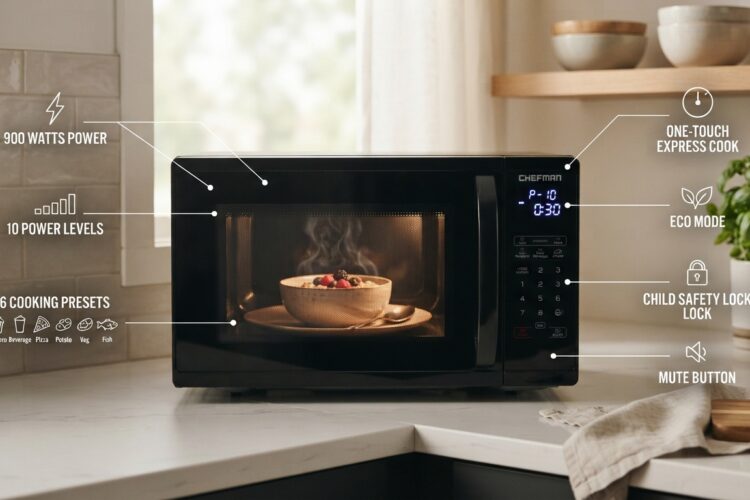
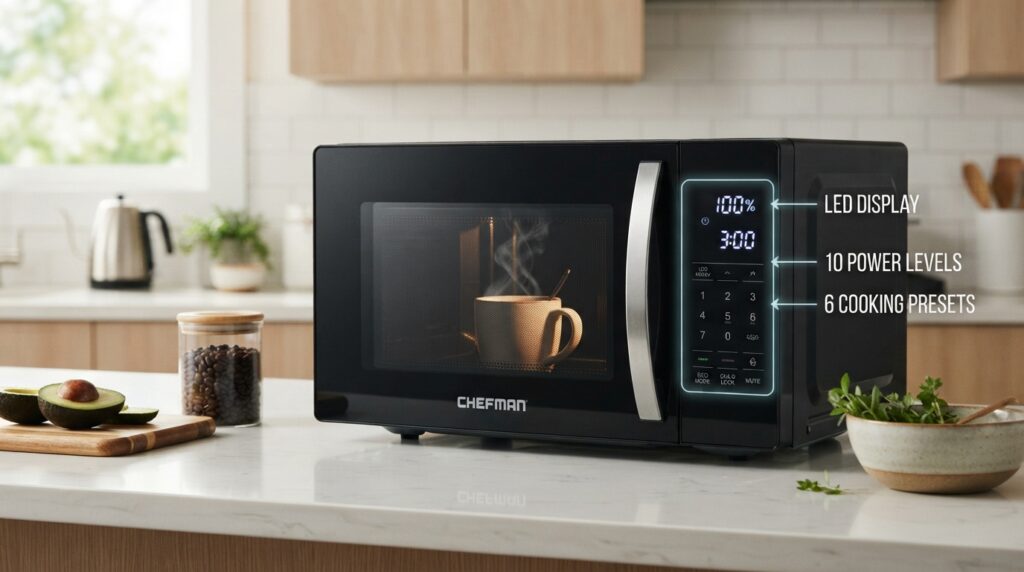
The Chefman Countertop Microwave Oven is built around a 0.9 cubic foot interior, which places it in the compact-to-mid-size category of home microwaves. It operates at 900 watts, a power level commonly found in units designed for everyday reheating and light cooking rather than heavy-duty use. The microwave includes 10 power levels, giving users more granular control over how food is heated, along with six cooking presets that use one-touch express cook buttons for common tasks like popcorn, beverages, frozen food, and pizza.
Beyond the basic heating functions, the unit includes an Eco Mode, a child safety lock, and a mute button—features that reflect a broader trend in kitchen appliances toward energy awareness, household safety, and quieter operation. Together, these elements suggest a product aimed at practical, no-fuss microwave use rather than elaborate culinary experimentation.
Key Features Explained
0.9 Cubic Foot Capacity
Capacity is one of the first things to consider when evaluating a microwave, and 0.9 cubic feet sits in a middle ground. It’s larger than the ultra-compact 0.7 cu. ft. models often marketed for dorms, yet smaller than the 1.6 to 2.2 cu. ft. units built for larger households. This size generally accommodates a standard dinner plate, a medium mixing bowl, or a mug for reheating beverages, though very large casserole dishes or oversized platters may not fit comfortably.
For people cooking primarily for one or two individuals, or reheating single servings rather than family-sized portions, this capacity tends to be a practical fit. Those regularly preparing large quantities of food may want to measure their typical cookware against the interior dimensions before assuming it will accommodate everything they use.
900 Watts of Power
Wattage affects how quickly and evenly food heats. Microwaves in the 700-800 watt range are generally considered lower-powered, often requiring longer cook times, while 1000+ watt models are typically found in larger, more heavy-duty units. At 900 watts, this microwave falls into a fairly standard middle range—strong enough for typical reheating and defrosting tasks, without being categorized as a high-output commercial-style appliance.
This wattage level is often associated with reasonably efficient cooking for everyday meals, though individuals accustomed to higher-wattage microwaves may notice a difference in how quickly food heats through, particularly with denser items like casseroles or thick cuts of meat.
10 Power Levels
Having ten distinct power levels allows for more nuanced control than a simple high/low/defrost setup. Lower settings are typically used for melting butter, softening ice cream, or gently reheating delicate foods without overcooking the edges before the center warms. Higher settings work well for boiling water or heating dense, moisture-rich foods.
This level of adjustability is useful for people who like to fine-tune their cooking rather than rely solely on preset programs. It also supports more careful reheating of leftovers, where uneven heating is a common frustration with simpler microwaves.
Six Cooking Presets with One-Touch Express Cook
The inclusion of six preset cooking functions—generally covering categories like popcorn, pizza, frozen vegetables, beverages, and similar common foods—reflects a design philosophy centered on convenience. Rather than manually setting time and power levels for routine items, users can select a preset and let the microwave apply pre-programmed settings.
This feature tends to appeal to people who want fast, simple operation without needing to think through cook times for everyday items. It’s worth noting that preset programs are generally calibrated for average portion sizes, so results may vary somewhat depending on the specific quantity or density of food being prepared.
Eco Mode
Eco Mode is a feature increasingly found in modern kitchen appliances, generally designed to reduce standby power consumption when the microwave isn’t actively in use. For households conscious of energy use, or simply looking to reduce unnecessary electricity draw from idle appliances, this can be a meaningful addition, even if the individual savings are modest on their own.
Child Safety Lock
The child safety lock feature allows users to disable the control panel, preventing children (or anyone else) from accidentally starting the microwave or altering settings. This is a common safety feature in modern microwaves and tends to be especially relevant for households with young children, multi-generational living situations, or shared spaces like offices and break rooms where accidental use is a consideration.
Mute Button
Many microwaves emit a series of beeps at the start and end of a cooking cycle, which can be disruptive in certain settings—shared living spaces, offices, nurseries, or homes where residents keep unconventional schedules. The mute button allows users to silence these audio alerts, offering a quieter operating experience when needed. This is a small but practical detail that speaks to thoughtful, everyday usability rather than flashy design.
How It Can Be Used
A compact microwave like this one tends to serve a variety of everyday functions rather than specialized cooking tasks. Some common uses include:
Reheating Leftovers: Perhaps the most frequent use for any microwave, reheating pre-cooked meals is straightforward with adjustable power levels, allowing users to warm food gently without drying it out or creating hot spots.
Defrosting Frozen Foods: Lower power settings are typically well-suited for thawing frozen meat, vegetables, or baked goods without partially cooking the exterior before the center defrosts.
Preparing Quick Snacks: Popcorn presets, in particular, are popular for movie nights or casual snacking, offering a simple one-touch solution rather than requiring manual timing.
Heating Beverages: A beverage preset can simplify the process of warming coffee, tea, milk, or cocoa to a consistent temperature without guesswork.
Cooking Frozen Meals and Sides: Many people rely on microwaves to prepare frozen entrees, vegetables, or side dishes, particularly on busy weeknights when a full stovetop or oven setup isn’t practical.
Softening or Melting Ingredients: Lower power settings can be useful for softening butter, melting chocolate, or preparing ingredients for baking without full cooking.
While this microwave is not designed to replace a conventional oven or stovetop for more complex meal preparation, it generally serves well as a supplementary appliance for quick, everyday cooking and reheating tasks.
Who It May Be Suitable For
Given its compact size and straightforward feature set, this type of microwave tends to suit certain living situations and cooking habits more than others.
Individuals and Small Households: For those cooking primarily for one or two people, the 0.9 cu. ft. capacity is often sufficient without taking up excessive counter space.
Dorm Rooms and Small Apartments: Students and renters with limited kitchen space often look for microwaves that balance functionality with a smaller footprint, making compact models a common choice in these settings.
Office Break Rooms: Shared spaces benefit from features like the mute button and child safety lock (useful for preventing accidental misuse), along with straightforward preset options that don’t require detailed instructions for occasional users.
Secondary Microwave Use: Some households use a second, smaller microwave in a basement, garage, or secondary living area, where a compact unit fits more practically than a full-sized model.
Those Who Prefer Simplicity: Not everyone wants a microwave with elaborate convection or air-fry functions. For users who primarily want dependable reheating, defrosting, and basic cooking, a more straightforward model can feel less overwhelming to operate.
That said, individuals who frequently cook for larger families, regularly heat oversized dishes, or want more advanced features like convection cooking or inverter technology may find that a larger or more feature-rich model better suits their needs.
Important Things to Consider
No single microwave fits every situation perfectly, and it’s worth thinking through a few practical points before deciding if this model aligns with your needs.
Kitchen Space and Placement
Even compact microwaves need adequate ventilation space around them, particularly at the back and sides, to operate safely and efficiently. Before purchasing, it’s helpful to measure the intended countertop space, including height clearance if placing the unit under cabinets.
Typical Portion Sizes
Since the interior capacity is 0.9 cubic feet, it’s worth considering whether your typical cookware—plates, bowls, mugs—fits comfortably. Those who frequently reheat large platters or family-sized dishes might find a larger capacity model more practical.
Preset Accuracy for Your Needs
Cooking presets are generally calibrated based on average food density and portion size. Because individual preferences and food brands vary, results from one-touch presets may need occasional manual adjustment, particularly for less common food items.
Noise Preferences
While the mute button addresses audible alerts, it’s worth noting that the microwave’s operational hum during actual cooking cycles is generally unaffected, as this is standard for how microwave motors and turntables function.
Energy Use Habits
Eco Mode can help reduce standby power consumption, but its overall impact will vary depending on how often the appliance sits idle versus how often it’s actively used throughout the day.
Child Safety Considerations
While the child safety lock is a helpful feature, it functions as a control panel lock rather than a physical barrier. Households with very young children may still want to consider placement height and general kitchen safety practices alongside this feature.
Comparing General Microwave Categories
To put this model’s features into context, it can help to understand how compact microwaves generally compare to other common categories on the market.
Compact Microwaves (0.6–1.0 cu. ft.): These models, including this one, are generally designed for individuals, small households, or secondary use in offices and shared spaces. They tend to prioritize a smaller footprint and simplified controls over expansive capacity or advanced cooking modes.
Mid-Size Microwaves (1.1–1.5 cu. ft.): These often provide a bit more interior space, making them suitable for small families or those who frequently reheat medium-sized dishes. They may include a slightly broader range of presets or slightly higher wattage.
Full-Size Microwaves (1.6–2.2 cu. ft.): Designed for larger households, these models typically accommodate bigger cookware and often integrate more advanced functions like convection cooking, sensor cooking technology, or higher wattage output for faster cooking times.
Microwave-Convection Combo Units: These appliances combine microwave and oven-style convection cooking, appealing to those who want more versatility in a single appliance, generally at a higher price point and larger physical footprint.
Each category serves a different practical purpose, and the “right” choice generally depends on household size, kitchen space, and specific cooking habits rather than one category being universally better than another.
Frequently Asked Questions
Is 900 watts enough for everyday cooking needs? For most reheating, defrosting, and basic cooking tasks, 900 watts is generally considered a standard, functional power level. Very dense or large food items may take slightly longer to heat through compared to higher-wattage models.
Can this microwave fit a large dinner plate? Standard dinner plates typically fit within a 0.9 cu. ft. interior, though it’s advisable to check specific plate dimensions against the microwave’s interior measurements if you regularly use oversized dishware.
Does Eco Mode affect cooking performance? Eco Mode is generally designed to reduce standby power consumption rather than alter active cooking performance, so it typically shouldn’t impact how food is heated during use.
How does the child safety lock work? The child safety lock generally disables the control panel, preventing the microwave from being started or adjusted until it is unlocked, which can help reduce accidental use.
Will the mute button silence all sounds? The mute button is generally intended to silence alert tones, such as start and completion beeps. Ambient operational sounds from the microwave’s motor and turntable typically remain unaffected, as this is standard across most microwave models.
Are the cooking presets adjustable? While presets are generally designed for one-touch convenience based on common food types and average portions, most microwaves—including models with preset functions—also allow manual adjustment of time and power level for more customized results.
Final Thoughts
Choosing a microwave often comes down to balancing space, capacity, and the specific features that matter most for daily use. The Chefman Countertop Microwave Oven, with its 0.9 cubic foot capacity, 900-watt power output, and combination of practical features like Eco Mode, a child safety lock, and a mute button, reflects a design geared toward straightforward, everyday functionality rather than elaborate culinary versatility.
For individuals, small households, dorm rooms, or shared office spaces, a compact and simplified microwave like this one may align well with common needs—quick reheating, defrosting, and basic cooking tasks without an overly complicated interface. Larger households or those seeking more advanced cooking technology may want to weigh this model against mid-size or full-size alternatives with additional capacity or features.
As with any kitchen appliance purchase, it helps to consider your typical cooking habits, available counter space, and which features genuinely matter for your day-to-day routine before making a decision.