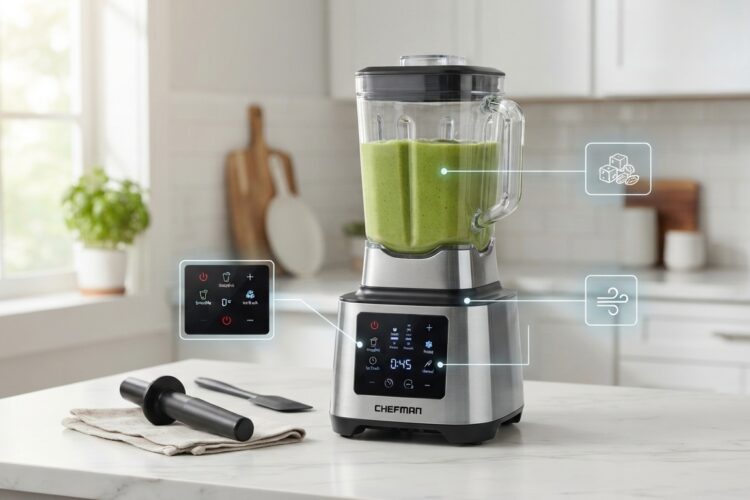
Blenders have quietly become one of the most versatile tools in modern kitchens. What used to be a single-purpose appliance for the occasional smoothie has evolved into a multi-functional workhorse capable of handling everything from crushed ice to nut butters. Among the many options available today, the Chefman Obliterator 48 oz Countertop Blender stands out as a model designed specifically for people who want serious blending power without stepping up to a commercial-grade machine.
This article takes a closer look at what this blender offers, how it can fit into different kitchen routines, and what factors are worth thinking about before deciding if it matches your needs. Rather than focusing on marketing language, the goal here is to break down the practical realities of using a high-wattage blender like this one.
What Is the Chefman Obliterator Blender?
The Chefman Obliterator is a countertop blender built around a 1380-watt motor, positioning it in the higher-power category of home blenders. It comes with a 48-ounce container, a stainless steel blade assembly, a tamper tool for pushing ingredients toward the blades during operation, and a scraper for cleanup and ingredient transfer. It also includes an auto-blend function, which allows the machine to run pre-set cycles rather than requiring constant manual control.
This combination of features suggests a blender aimed at people who regularly work with tougher ingredients—think ice, frozen fruit, whole nuts, or fibrous vegetables—rather than someone who only occasionally makes a light fruit smoothie.
Key Features Explained
High-Wattage Motor
The defining feature of this blender is its 1380-watt motor. In blender terminology, wattage generally correlates with the amount of torque and speed the motor can generate. Higher wattage doesn’t automatically mean “better” for every task, but it does typically translate into an easier time breaking down dense or frozen ingredients. For tasks like crushing ice into a fine consistency or pulverizing whole almonds, more powerful motors tend to produce smoother results with less manual intervention.
48-Ounce Container Capacity
A 48-ounce container sits in the middle range for home blenders—large enough to prepare multiple servings at once, but not so oversized that it becomes unwieldy for smaller kitchens or single-serving use. This capacity can be useful for families, meal preppers, or anyone who likes to batch-prepare smoothies or soups for the week.
Stainless Steel Blade Design
The blade assembly is made from stainless steel, a material commonly chosen in blender design because of its durability and resistance to corrosion. Stainless steel blades are generally better equipped to handle repeated contact with ice and hard foods without dulling as quickly as blades made from lower-grade metals.
Auto Blend Function
The inclusion of an auto-blend setting is worth highlighting because it shifts some of the guesswork away from the user. Instead of manually adjusting speed throughout the blending process, this function allows the machine to run a programmed cycle suited to specific tasks, such as smoothies or ice crushing. For people who want consistent results without needing to babysit the blender, this can simplify the process considerably.
Tamper and Scraper Included
Two accessories come bundled with this blender: a tamper and a scraper. The tamper is designed to help push thick mixtures or stuck ingredients down toward the blades while the machine is running, which can be especially helpful when working with dense smoothies, nut butters, or frozen ingredients that tend to form air pockets. The scraper, on the other hand, assists with removing every bit of the blended mixture from the container and can also help during cleanup.
How This Blender Can Be Used
A blender in this power range tends to open up a wide variety of use cases beyond basic smoothies. Here are some practical ways it might be used in a typical kitchen:
Smoothies and Frozen Beverages This is the most obvious use case, and the combination of high wattage and a tamper tool makes it easier to blend frozen fruits, leafy greens, and ice into a smooth consistency without needing to add excessive liquid.
Ice Crushing Whether for cocktails, snow cones, or iced coffee drinks, a powerful motor paired with a durable blade system is typically well-suited to crushing ice efficiently.
Nut Butters and Nut Milks Grinding whole nuts into butter or milk requires sustained motor power, as the process usually involves an initial coarse stage before the mixture becomes smooth. A high-wattage motor can make this transition more manageable.
Soups Some people use high-powered blenders to make hot soups by blending cooked vegetables directly, relying on the friction generated by the blades to warm the mixture. This is a more advanced use case and may depend on the specific design and safety features of the container.
Batters and Doughs Lighter batters, such as pancake or crepe batter, can also be mixed in a blender like this, offering an alternative to traditional mixing bowls.
Sauces and Dressings Because the container size allows for batch preparation, this blender could also be used to prepare larger quantities of dressings, dips, or sauces at once.
Who Might Find This Blender Suitable
Not every blender fits every lifestyle, so it’s worth considering who this type of appliance tends to serve well.
Home Cooks Who Prioritize Versatility People who like using one appliance for multiple purposes—smoothies, soups, nut butters, and more—may appreciate the flexibility that a high-powered blender like this offers.
Families or Batch Preparers The 48-ounce capacity suits those who want to prepare larger quantities in a single session, whether for multiple family members or for meal prepping across several days.
Individuals Focused on Whole-Food Diets Those who frequently work with whole fruits, vegetables, nuts, and ice may benefit from a motor capable of handling denser textures without excessive strain.
People Who Prefer Simplified Controls The auto-blend function may appeal to users who want consistent results without manually adjusting speeds throughout the process.
On the other hand, individuals who only need to blend a single smoothie serving occasionally, or who have very limited counter and storage space, might find a smaller or more compact blender better suited to their needs.
Important Things to Consider Before Choosing This Blender
While the features of this blender are appealing on paper, there are a few practical points worth thinking through before making a decision.
Counter Space and Storage High-powered blenders with larger containers tend to have a bigger footprint. It’s worth measuring your available counter and storage space to ensure it fits comfortably in your kitchen.
Noise Levels Motors in the 1300+ watt range often produce more noise than lower-wattage models, particularly when crushing ice or blending frozen ingredients. This is generally standard across the high-power blender category rather than unique to any one model, but it’s a factor to keep in mind if noise is a concern in your household.
Cleaning Routine Even with a scraper included, blenders with powerful motors and multiple components may require a bit more attention during cleanup, especially around the blade assembly.
Learning Curve for Advanced Uses Tasks like making hot soup or nut butter in a blender often require some technique—knowing how long to blend, when to use the tamper, and how to manage consistency. New users may need a short adjustment period to get comfortable with these techniques.
Wattage vs. Real-World Performance While 1380 watts is a strong number, actual blending performance also depends on blade design, container shape, and how ingredients are loaded. Wattage is one useful indicator, but it shouldn’t be treated as the only factor influencing performance.
Comparing Blender Categories: A General Overview
To put this blender into context, it helps to understand how different categories of blenders generally compare. This comparison focuses on categories rather than specific competing brands or models.
Entry-Level Blenders (300–600 Watts) These are typically compact, affordable, and suited for simple tasks like blending soft fruits or making basic smoothies. They may struggle with ice or frozen ingredients and often require more time or added liquid to achieve a smooth texture.
Mid-Range Blenders (700–1000 Watts) This category usually balances price and performance, offering decent ice-crushing capability and multiple speed settings. They can handle most everyday blending tasks but may show more strain with very dense or frozen ingredients.
High-Power Blenders (1200+ Watts) Blenders in this range—where the Chefman Obliterator falls—are generally built for more demanding tasks: whole nuts, hard vegetables, large batches of ice, and thicker mixtures. They tend to offer more consistent results across a wider variety of ingredients, though they may come with a larger footprint and higher noise levels.
Commercial-Grade Blenders These are typically used in professional settings like smoothie shops or restaurants. They often feature even higher wattage, larger containers, and more durable components designed for constant daily use, but they usually come at a significantly higher cost and larger size, making them less practical for typical home kitchens.
Understanding these categories can help clarify why certain features—like the auto-blend function or tamper tool—are more commonly found in the higher-power segment, where consistent performance with tough ingredients becomes more important.
Frequently Asked Questions
Is this blender suitable for crushing ice regularly? Given its 1380-watt motor and stainless steel blades, this blender is generally designed with ice-crushing capability in mind. However, individual results can vary based on how much ice is used at once and the technique applied.
Can it be used for hot soups? Some high-powered blenders can generate enough friction to warm ingredients through extended blending, but this depends on the container’s material and design. It’s worth checking the manufacturer’s guidance on this specific use case before attempting it.
Does the auto-blend function require manual supervision? While the auto-blend setting is designed to simplify the process, it’s generally a good practice to stay near the appliance during operation, particularly when working with thick or frozen ingredients that may require occasional use of the tamper.
Is the 48-ounce container large enough for a family? This size is generally suitable for preparing multiple servings at once, making it a reasonable fit for small to medium households or batch preparation.
What is the purpose of the tamper tool? The tamper is used to push ingredients toward the blades while the blender is running, helping prevent air pockets and uneven blending, especially with thick mixtures.
How should the blades be cleaned? Most blenders with removable or accessible blade assemblies can be cleaned with warm water and dish soap, though it’s advisable to follow the specific cleaning instructions provided with the product to maintain blade longevity and safety.
Is this blender easy to store? Given its size and power, this blender is more suited to being kept on the counter rather than stored away after each use, particularly for those who use it frequently.
Final Thoughts
The Chefman Obliterator 48 oz Countertop Blender represents a solid example of what a high-powered home blender can offer: strong motor performance, a reasonably sized container, and thoughtful accessories like a tamper and scraper that address common blending challenges. Its auto-blend function adds a layer of convenience for those who prefer simplified operation, while the stainless steel blade construction speaks to durability over repeated use with tough ingredients.
That said, no single blender is a perfect fit for every kitchen or every user. Considering factors like counter space, noise tolerance, and the types of foods you plan to prepare most often can help clarify whether a high-power blender like this aligns with your daily routine.